

How to Spot a Fake Tory Burch: An Authentication Guide
Fakes of this label are all over the market, and most of what has been written about identifying them is simply wrong. What follows is a checklist, though it opens with a warning about the way such tests are routinely misused. No list of markers comes from Tory Burch at all, which means the markers below are supplied by resale and consignment houses. Those firms know the product well, but they are commercially interested parties and they openly disagree with each other. The honest position is that no single physical detail authenticates a piece from this house. A buyer is kept safe by the channel the item arrived through, supported by a weight of physical evidence rather than by any one test.
Start with what the brand does publish
Rather than cataloguing details, the brand’s own counterfeit guidance is built around channels. It states that authentic product is sold only through its own stores, its own outlet stores, its own site and selected authorised department and specialty retailers. A further warning covers the things buyers routinely mistake for proof, none of which is worth anything. Neither a web address containing the brand name nor search results, professional photography or a claim of www.torryburch.net official status proves anything. Discount pricing is not evidence of legitimacy, and heavy discounting is often the opposite. There is no such thing as an official Tory Burch authentication service that could be identified, so neither a certificate nor a brand-run programme is available.
The serial number question, on which the sources openly disagree
No area is muddier, so treat every categorical claim about it with suspicion. One camp of consignment authenticators maintains that the bags have no serial numbers whatsoever. Others report an interior tag carrying a style and date code, roughly a style number followed by a two-digit month and a two-digit year. The sensible conclusion is that the point is unsettled, not that one camp is lying. Even in the accounts where the code exists, it functions as a style and production code rather than as a unique serial for a single item. So it resists any lookup or verified against any register, and it cannot carry a decision by itself. Use the presence or absence of an interior code as context, never as a verdict.
Country of origin: the test to cross off
The most common false test readers apply is the made-in label. “Made in China” is widely read as proof of a fake, and in the case of this brand that reading is incorrect. Genuine production for the house is reported from China, Italy and Portugal alike. Pieces marked as made in Vietnam and India also circulate in the market. A counterfeiter can print Italy as easily as China, since the label is the least costly part of the job. Because origin settles nothing in either direction, delete it from your checklist and look at construction instead.
The checklist itself
The markers that resale specialists repeat most consistently are set out below. Treat it as a weight-of-evidence exercise, not a pass or fail sequence. On its own a weak signal is of little use, though three or four of them together usually mean something. Do it in good daylight, holding it against a piece you already trust from the same material family. Bear in mind that the better counterfeits have improved a great deal, and that the most obvious tells have largely been designed out. If you cannot reach a confident conclusion, that in itself is a result, and the answer is to walk away or use an authenticating consignment platform.
The hardware and the stitching
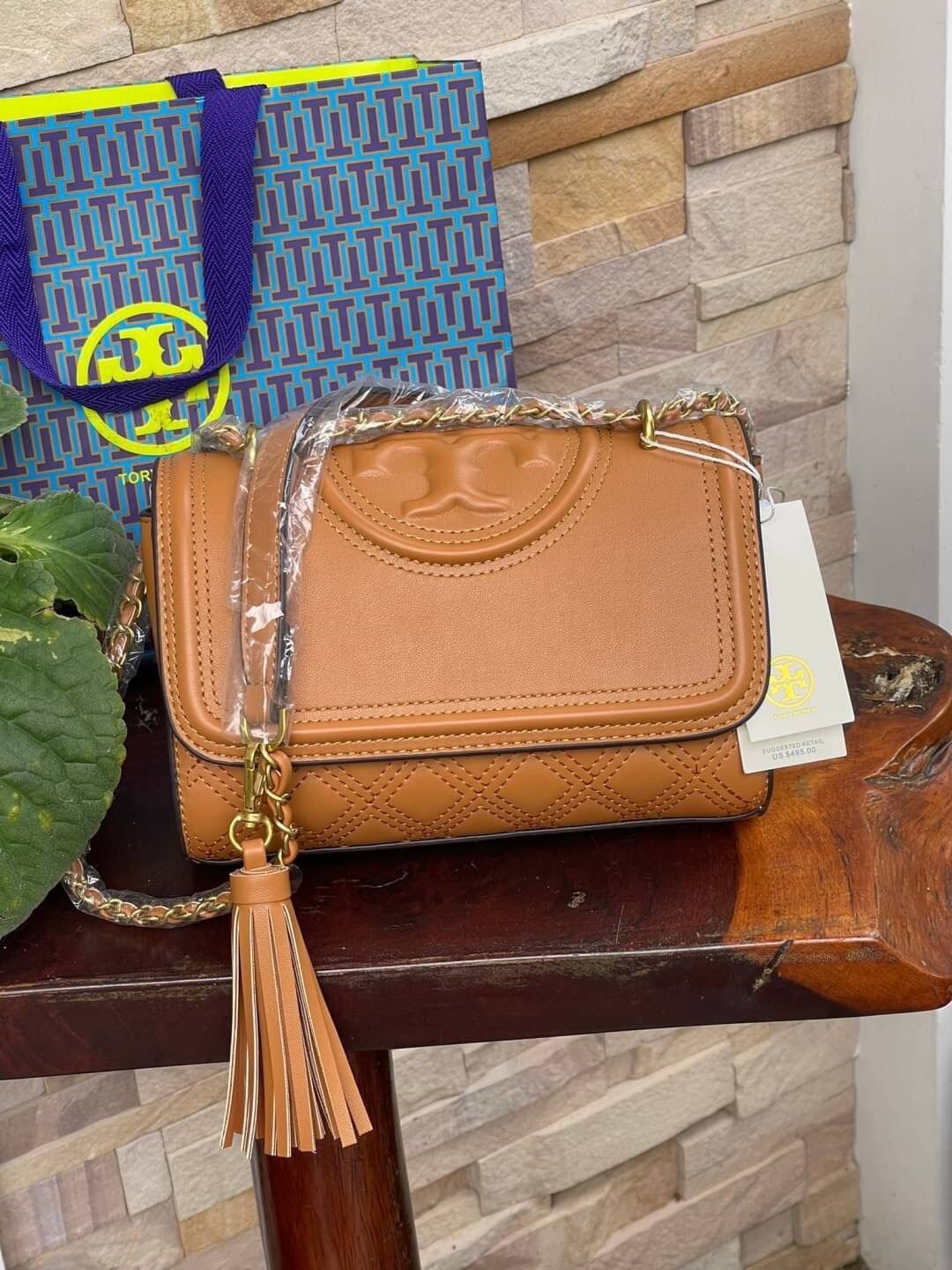
The better-made fakes still come apart most often on hardware. The Double T emblem is built from a serif T and its mirror image inside a circle, and it has been in use since 2004. Do not confuse it with the T Monogram, which is a separate, later all-over repeating pattern reported as introduced for Spring 2021. Copies frequently confuse the two, or render the mirrored Ts unevenly. Stitching is the runner-up among structural signals, since consistent machine work is expensive to fake at scale. Look at it along a whole seam rather than at one attractive inch.
- Crisp casting on both Ts, clean mirroring, even plating, and no sign of pitting or flaking
- Smooth-running zips and feet with a substantial feel instead of a hollow one
- Even spacing, straight runs and consistent tension and colour in the thread
- Free of skipped stitches, backtracked runs and stray thread ends within the lining
Leather, edge finishing and interior labels
Materials include saffiano, pebbled and nappa leather, spazzolato, patent and suede. Each of those has a distinct hand, and a fake usually gets the weight or the grain slightly wrong. Smell is crude but useful, since genuine leather does not smell of vinyl or solvent. Look next at corners and edge coating, because finishing them properly takes time counterfeiters will not spend. Interior labels are reported to be cleanly aligned and legible, so smudged printing or crooked placement is worth noting. Not one of them is decisive on its own, and even taken together they rank beneath the channel question.
- Grain and weight consistent with the named material rather than uniformly plastic
- Clean corner work, with edge coating applied neatly on the higher-tier pieces
- An interior label that is straight, sharply printed and evenly weighted
- Paper hangtags reported to use a plain punched hole rather than a metal ring or grommet
Packaging is the easiest thing to fake
Genuine pieces do come with a branded dust bag, and that fact is regularly misused. Dust bags, boxes, tissue, cards and ribbon are all counterfeited, and they are sold separately in bulk. A seller can buy convincing packaging far more cheaply than convincing hardware. This makes packaging the least reliable evidence in the entire exercise. It should never carry the decision, and a listing that leads with the box rather than the object is a mild warning in itself. Treat complete packaging as a small comfort on an item that has already passed the construction checks.
Weighting the evidence
The table below shows how much weight each signal deserves. The weights reflect how easy each element is to fake, not how often it is discussed online. Notice that the two things most written about, origin and packaging, carry no weight at all. Notice too that the highest weight sits with something that is not a physical marker. Given that no marker list is published by the company, this is the correct order of operations for the brand. The middle rows are corroboration, meaningful only alongside each other.
| Signal type | What is reported on genuine pieces | Evidential weight |
|---|---|---|
| The purchase channel | A brand store, a brand outlet store, the brand site or an authorised retailer | The decisive factor |
| Double T hardware and emblem | Crisply cast, precisely mirrored, evenly plated | High |
| Stitching | Straight runs, even spacing, steady tension | High weight |
| The leather and the edges | Hand appropriate to the material, corners smoothly finished | Counts heavily |
| Interior label | Aligned, legible, consistent font weight | Medium |
| Style code inside | Some authenticators report it, others deny it entirely | Low weight, and disputed |
| The paper hangtag | A plain punched hole is reported as usual | Low weight |
| The made-in label | All of China, Italy and Portugal are genuine origins | None |
| Dust bag and packaging box | Faked at scale and sold on its own | No weight at all |
Channel, price and listing behaviour
Most counterfeits are identified before anyone touches the object. The brand operates physical outlet stores, many inside premium outlet centres, but it states plainly that it has no online outlet website. Anyone searching for a tory burch outlet online will therefore find sites that are misrepresenting the brand, whatever their design quality suggests. A genuine tory burch sale has a fixed window, which makes a permanent site-wide markdown a warning on its own. Watch for a catalogue where every item carries the same discount, where sizes never sell out, and where product names are slightly wrong. Misspelled brand names and mangled model names are routine, and so are styles from seasons that were never sold together. At checkout, pressure towards wire, bank transfer, gift card or cryptocurrency is the single clearest warning.
If you think you already bought a fake
Act quickly, because most remedies are time-limited. Photograph the item, the packaging and the listing before the goods are sent back or the seller edits it. The most effective route is in most cases a payment dispute, which is why card payments matter as much as they do. Marketplaces run their own counterfeit reporting processes and often refund once evidence is supplied. Reports about suspected counterfeit sellers and sites can go to the brand’s enforcement team through client services contacts, and to the National IPR Center. Keep the item until any dispute is resolved, since destroying or reselling it undermines your own case.
- Photograph everything before contacting the seller
- Open a payment dispute within the card or platform window
- Report the listing to the marketplace and to the brand
- Hold the item for as long as the claim runs